
SSH PROJECT MANAGEMENT
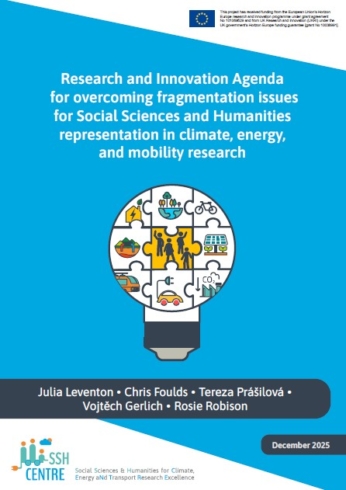
Social Sciences and Humanities are essential for understanding how climate, energy and mobility transitions work in real life, yet SSH contributions are still often fragmented or overlooked. The SSH CENTRE Research & Innovation Agenda (RIA) brings together insights from 3.5 years of interdisciplinary and transdisciplinary collaboration to help projects overcome these barriers. It offers practical guidance for researchers, coordinators and proposal writers who want to strengthen SSH integration in Horizon Europe and beyond.
SSH Project Management in a nutshell
The RIA identifies the structural and procedural factors that shape meaningful SSH involvement in research and innovation projects. It draws on real experiences from SSH‑led collaborations, interdisciplinary “experiments”, and knowledge brokerage activities carried out across Europe. The Agenda is designed to help teams understand where SSH adds value and how to embed it more effectively in project design and management.
The RIA outlines five enabling conditions that support stronger SSH collaboration: building a solid basis for interdisciplinary work, reframing what “applied” science means, integrating SSH across topics, recognising local contexts, and treating participation and engagement as areas of expertise. Each condition includes concrete example actions that researchers, coordinators and proposal writers can adapt directly—for instance, how to reflect SSH expertise in proposals, how to design better engagement processes, or how to strengthen evaluation and reporting.
The RIA was discussed with senior representatives from DG RTD and CINEA in January 2026. Their reflections highlight both the value of the Agenda and the practical constraints within current funding structures. While opinions differed on how some recommendations could be implemented, the discussion confirmed the need for clearer processes, stronger support for SSH expertise, and ongoing dialogue between researchers and policymakers.
 This project has received funding from the European Union’s Horizon Europe research and innovation programme under grant agreement No 101069529 and from UK Research and Innovation (UKRI) under the UK government’s Horizon Europe funding guarantee [grant No 10038991].