
Why Europe’s Next Wave of Innovation Must Be Social
Insights from the Final SSH CENTRE Event (28 January 2026): Shaping the next European research and innovation framework
As Europe prepares its next research and innovation framework—Horizon Europe 2028–2034—a decisive question is emerging: How can technological breakthroughs truly deliver societal impact? With expectations of a significantly expanded budget and a strong push toward quantum technologies, next‑generation AI, and cleaner mobility systems, the EU’s ambitions for the green and digital transitions are clear.
But at our SSH CENTRE Final Panel Event, one message stood out above all: there is no Europe without SSH (Social Sciences and Humanities), and no policy implementation without its citizens. Europe’s next steps require not just faster innovation, but a deeper understanding of the people, communities, and systems that shape how those innovations land in the real world.
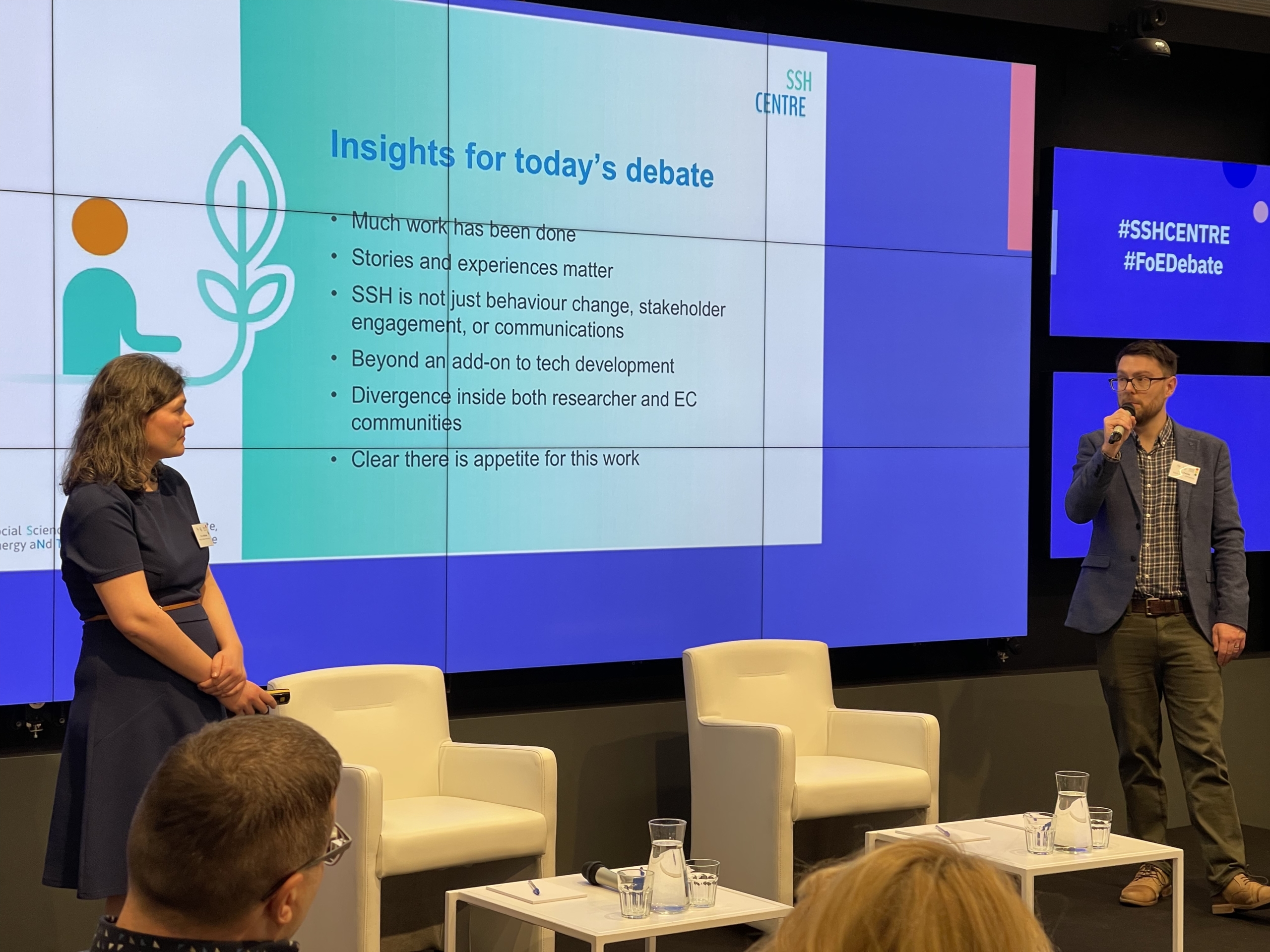
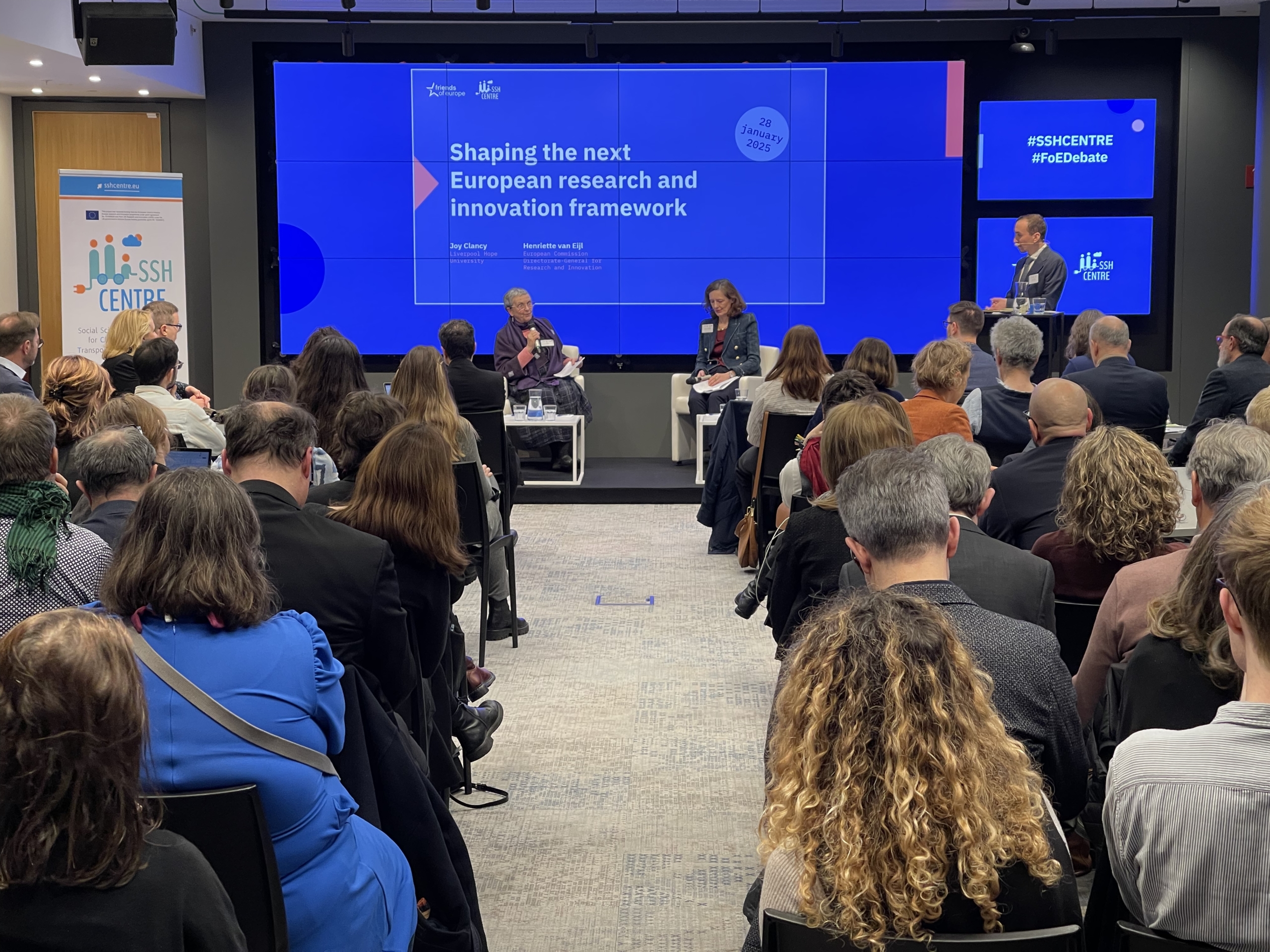
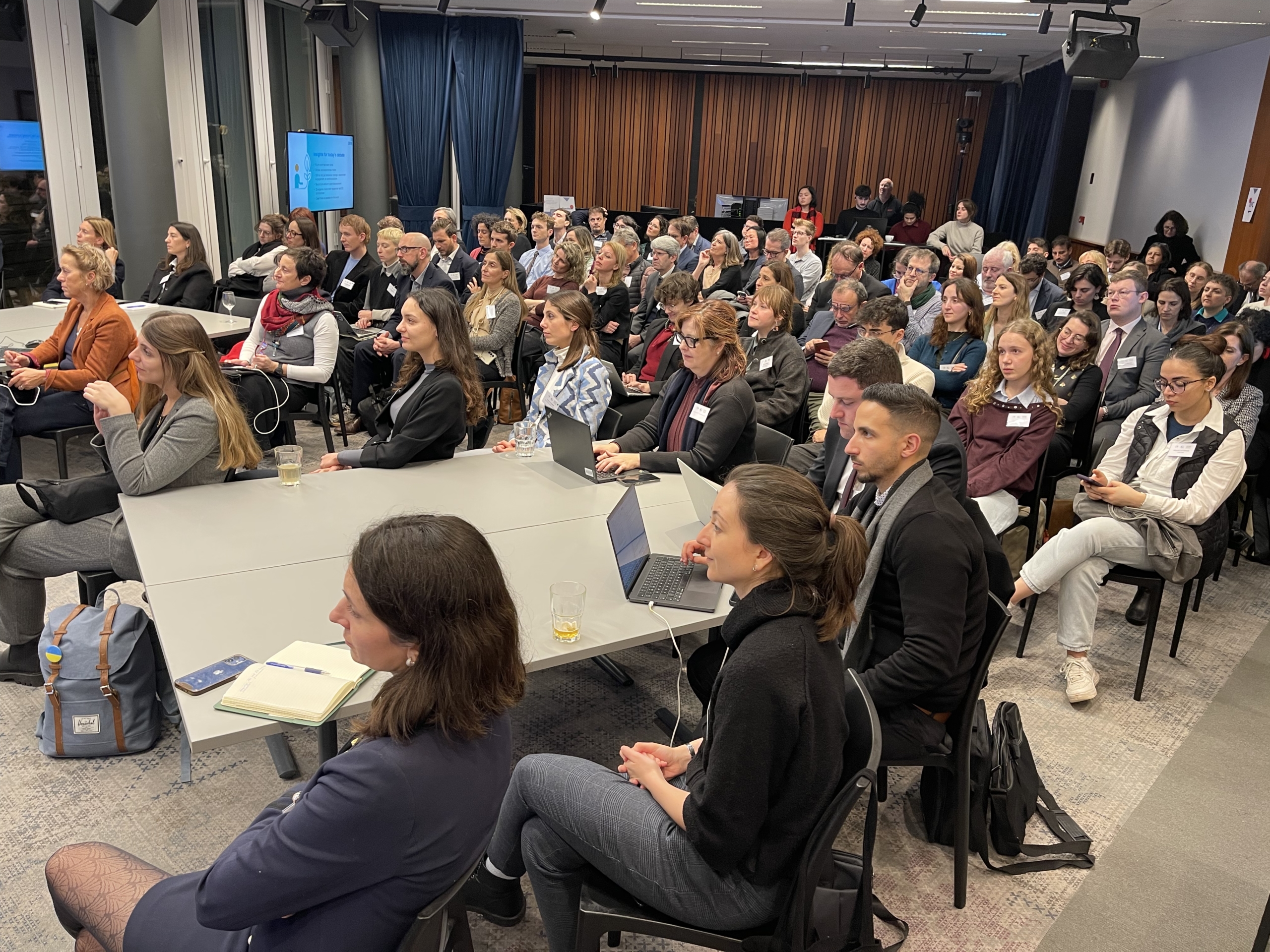
The Panel Event was opened by Professor Rosie Robison and Professor Chris Foulds (ARU), and the panel discussion with Henriette van Eijl (European Commission, DG Research & Innovation) and Professor Joy Clancy (Liverpool Hope University) was moderated by Davide Sofia (Friends of Europe, SSH CENTRE consortium partner).
A New “And-And” Narrative for Europe
A long-standing tension has shaped European research and innovation (R&I) policy over recent years: competitiveness versus societal well-being. Yet, as Henriette van Eijl (European Commission) highlighted, this is a false dichotomy. Europe is entering an “and‑and era”—where economic strength and social cohesion must advance together.
The SSH Horizon Report – Integration of SSH in Horizon Europe confirms that integration is already happening: nearly 40% of the total collaborative project budget now goes to SSH‑flagged activities. Innovation is no longer about technology for its own sake; rather it is about creating solutions that serve citizens, enhance trust, and deliver real-world impact across Europe’s diverse communities.
Mind the (Data) Gap
Data shapes policies—but only if collected correctly. Professor Joy Clancy warned that current approaches to data risk overlooking human realities, especially in the context of the energy crisis. For instance, women are disproportionately unable to pay energy bills, yet policy frameworks often treat “households” as a uniform entity. This obscures structural inequalities and undermines solutions.
To close this gap, Europe must rethink how it collects and interprets data, ensuring visible, disaggregated insights that safeguard its most vulnerable citizens.
Breaking the “Mumbo-Jumbo”: Communication as Collaboration
“Academics are great at speaking to other academics, but not to non-academics,” Joy Clancy noted—capturing the communication challenge that often blocks transdisciplinary cooperation.
If social theories sound like “mumbo‑jumbo” to engineers or policymakers, collaboration collapses before it begins.
The solution? Clearer language. More translation of insights into practical frameworks. A shared vocabulary across disciplines. Transdisciplinarity succeeds when communication does.
Conclusion: A Fairer, Stronger Europe Needs Integrated Knowledge
The future of European R&I will not be defined by technology alone, but by our ability to embed that technology within the social, economic, and political realities of everyday life.
By improving communication, closing data gaps, and ensuring that social insights stand alongside technical expertise, Europe can build not only a stronger innovation ecosystem—but a fairer and more resilient one.
Spotlight: Shared Green Societies Forum
Shared Green Societies is a new European forum designed to connect practice, policy, and research for a fair and inclusive green transition. Across Europe, civil society, communities, authorities, and SSH researchers are developing solutions—but too often in isolation. The Forum aims to bridge these gaps by building shared understanding and linking technological and policy opportunities wi th societal expectations.
The Forum launched in Brussels on 28 January 2026, bringing together civil society, researchers, regional actors, and policymakers to co-create its next steps and support community‑led initiatives.
The SSH CENTRE’s Final Event was part of the agenda of the Shared Green Societies Launch Event.
 This project has received funding from the European Union’s Horizon Europe research and innovation programme under grant agreement No 101069529 and from UK Research and Innovation (UKRI) under the UK government’s Horizon Europe funding guarantee [grant No 10038991].